
Tulip Interfaces has spent the past several years arguing that most manufacturing software problems are actually app problems — that the reason MES rollouts drag on is because vendors are trying to sell you a monolith when what you actually need is a set of purpose-built screens for the specific work happening at a specific station. The company’s 2026 platform updates double down on that bet: a broader library of native machine and IIoT connectors, more app-building templates aimed at frontline use cases, and continued expansion of what Tulip calls its frontline operations platform positioning, which is really a rebrand of “MES-adjacent tools that plant engineers can build themselves without a systems integrator on retainer.”
That positioning matters more in 2026 than it did a couple of years ago, because plant IT teams are no longer just reading Tulip’s marketing — they’re running actual pilots against incumbent MES platforms and asking a harder question: does low-code replace the backbone, or does it just make the parts everyone hates about MES rollouts less painful?
What Tulip actually is
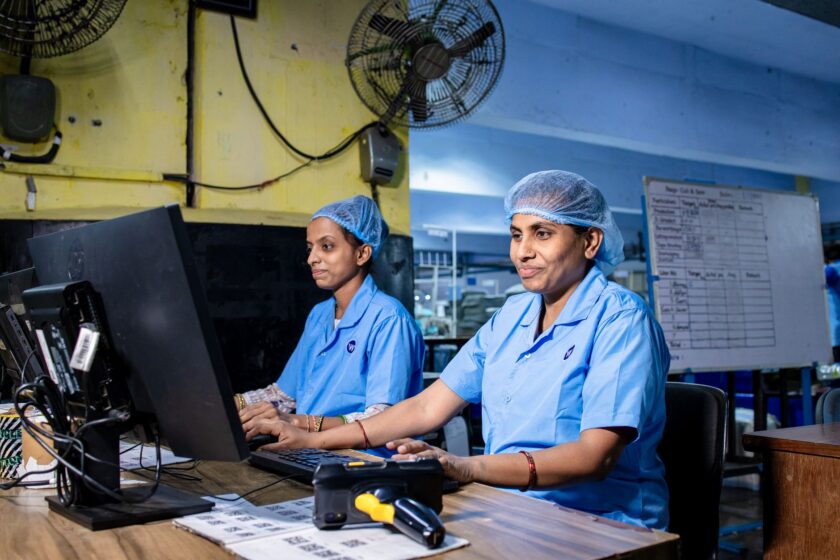
Tulip is a low-code application platform built specifically for manufacturing environments. You build apps — visual work instructions, andon triggers, changeover checklists, line-clearance forms — using a drag-and-drop interface rather than writing code from scratch, and those apps run on tablets, industrial PCs, or wall-mounted displays at the workstation. Under the hood, Tulip captures the data those apps generate (cycle times, defect counts, operator inputs, sensor readings) into its own data model, and it connects to machines and sensors through a growing set of native connectors alongside its edge device, sometimes called the Tulip Player or edge gateway depending on deployment.
The company markets this as a “frontline operations platform” rather than an MES, which is a meaningful distinction and, in our assessment, mostly an honest one. Tulip isn’t trying to be a system of record for genealogy across a multi-plant enterprise. It’s trying to be the fastest path from “we have a paper form or a spreadsheet on this line” to “we have a connected app that captures structured data,” and the 2026 connector expansion is aimed squarely at removing the last major friction point in that pitch: getting machine and PLC data into an app without a controls engineer writing custom OPC UA tag mapping every single time.
Where low-code genuinely wins
The use cases where Tulip’s approach earns its reputation are consistent and specific, and they tend to share a common shape: high-frequency human interaction, low tolerance for IT lead time, and a requirement that changes something a supervisor, not a systems integrator, can iterate on.
Visual work instructions are the clearest example. Building step-by-step guided instructions with conditional logic (skip step 4 if this variant, show a video if the operator flags a quality issue) is exactly what low-code tools do well, and it’s exactly the kind of work that traditional MES modules often handle clumsily or require configuration change requests to modify. Andon and escalation workflows are another strong fit — the logic is simple, the UI needs are visual and immediate, and the value is in how fast you can stand it up and then tweak it after watching operators use it for a week.
Changeover and setup checklists sit in the same category: structured, repetitive, benefit enormously from enforced sequencing and photo/video capture, and rarely require deep integration with ERP or a plant historian to be useful. Tulip’s 2026 expansion of native machine connectivity — reading PLC tags, pulling data from common industrial protocols, and packaging that into pre-built connector templates — genuinely reduces the setup burden for feeding real-time machine state into these apps, which was previously one of the more time-consuming parts of a Tulip deployment.
The pattern worth noticing
Every one of those use cases is operator-facing and app-shaped. They’re discrete pieces of functionality, not systems. That’s the honest boundary of what low-code does well in this space, and it’s worth internalizing before you scope anything.
Where the boundaries show up
The places where practitioners still reach for a traditional MES or a dedicated historian tend to involve scale, genealogy, and integration depth that low-code platforms weren’t built to own.
Full electronic batch records with regulatory traceability across a complex multi-site genealogy tree — where you need bidirectional, auditable links between raw material lots, in-process parameters, and finished goods across dozens of process steps — is still generally the domain of established MES platforms with mature ISA-95 and, where relevant, GMP-aligned data models. Tulip can capture the data at each step just fine; the question is whether you want your system of record for that genealogy living inside an app-building platform versus a platform purpose-built around that data model from day one.
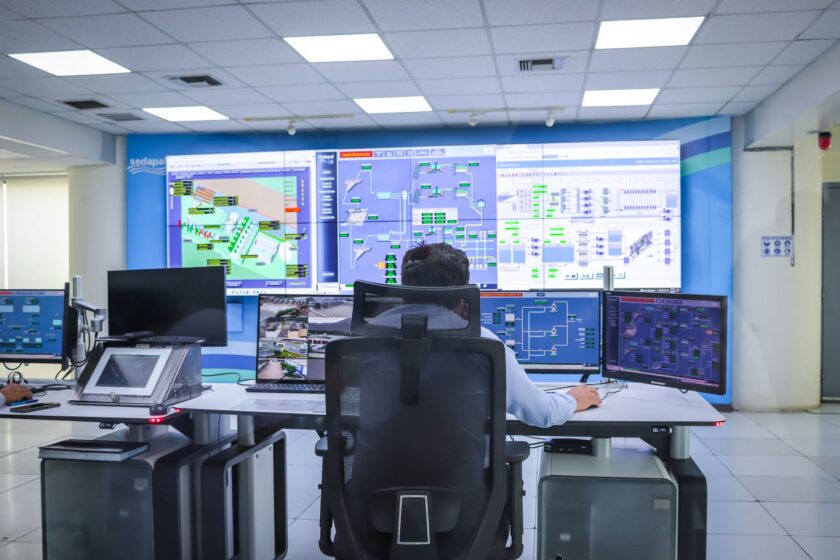
Similarly, high-frequency time-series capture at scale — the kind of thing a proper plant historian handles with compression, long-term retention, and analytics tooling built around it — isn’t really Tulip’s game, even with better connectors. You can pull machine data into an app for display and alerting, but if you need years of high-resolution process data for SPC or predictive work, that data usually still belongs in a historian, with Tulip (or any frontline app layer) sitting on top of it rather than replacing it.
ERP-grade integration — scheduling, complex BOM explosion, multi-plant inventory reconciliation — is another place where low-code platforms are consumers of that data, not replacements for the systems that own it. Tulip’s connectors make it easier to pull and push data to those systems; they don’t make Tulip the system that should own master scheduling logic.
Who this fits, who it doesn’t
In our assessment, Tulip fits well for discrete manufacturers with a strong population of manual or semi-automated stations, plants that have been burned by long MES configuration cycles and want to move fast on visible operator-facing problems, and organizations with an internal team (even a small one) willing to own app maintenance over time — because low-code still means someone owns the logic.
It may not suit shops that need deep regulatory genealogy as their primary requirement, plants that are already running a mature MES and don’t have an obvious gap it’s leaving unfilled, or organizations that don’t have anyone internally willing to be the “app owner” — low-code shifts maintenance burden from IT tickets to internal ownership, and that only works if someone actually picks it up.
A pilot-scoping checklist before you commit budget
- Pick one painful, well-bounded workflow — not “digitize the line,” but “replace this specific paper changeover checklist.”
- Identify exactly which machine data you need natively versus which you’re willing to get from an existing historian or SCADA feed.
- Ask who owns app changes after go-live, and get a real name, not a department.
- Map out whether genealogy or batch-record requirements exist downstream — if they do, decide now whether Tulip is the system of record or a front end to one.
- Set a defined pilot window with a specific decision gate, not an open-ended “let’s see how it goes.”
- Check integration requirements against your actual ERP and historian, not the vendor’s connector list in the abstract.
The bottom line
Tulip’s 2026 updates make a real platform meaningfully better at the thing it was already good at: getting operator-facing apps onto the floor fast, with less friction pulling in machine data than in prior versions. That’s a legitimate advance, not a marketing reframe. But the underlying shape of the tool hasn’t changed, and shouldn’t be expected to. It’s still an app layer, exceptionally good at the visible, iterative, human-centered parts of shop floor digitization, and still not a substitute for the genealogy depth, historian-grade data retention, or ERP integration muscle that a traditional MES backbone provides. The smart move in 2026 isn’t picking one or the other — it’s scoping a pilot narrow enough to prove the app-layer value fast, while being honest up front about which systems still need to own the data underneath it.
This article was written with the assistance of artificial intelligence. While we aim for accuracy, the information may be incomplete, out of date, or incorrect, and should be independently verified before you rely on it for any decision. It is provided for general information only and does not constitute professional advice.